
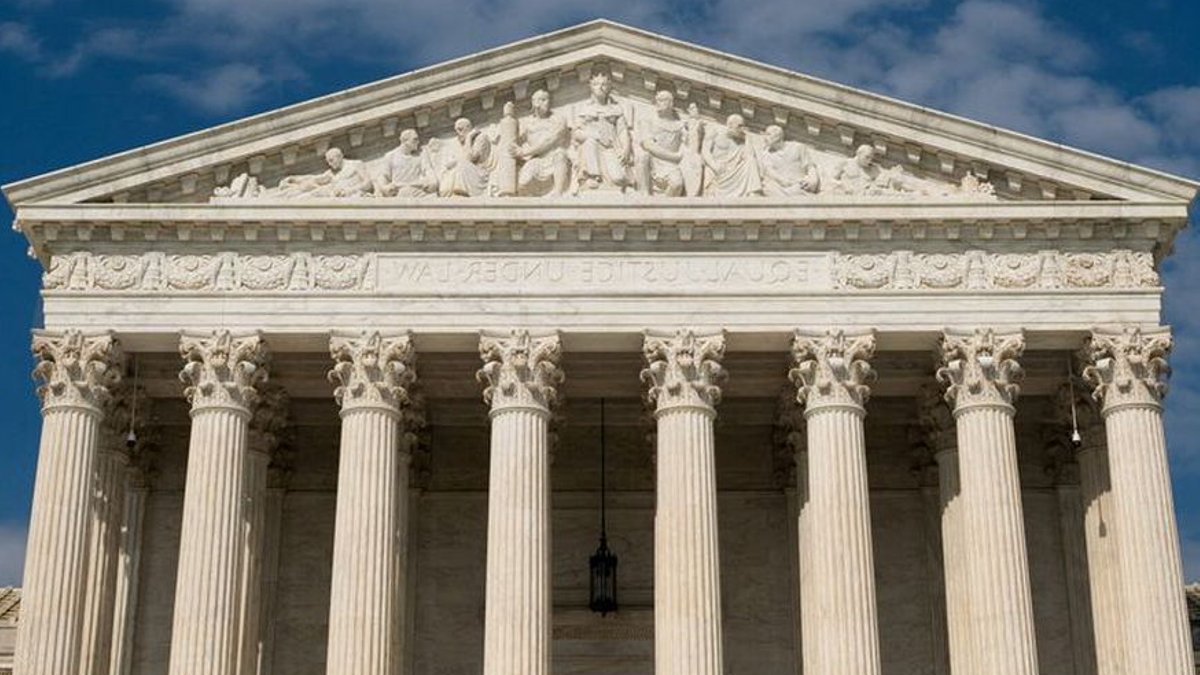
The Supreme Court’s latest term kicks off on Monday, continuing a pattern from its previous session where disputes over President Donald Trump’s expansive executive actions dominated proceedings, forcing justices to repeatedly assess the boundaries of his authority.
High Court Faces Fresh Trump-Related Legal Challenges
With a 6-3 conservative majority still in place after concluding its prior term in June, the court spent much of that period resolving lawsuits tied to Trump’s aggressive exercise of presidential power, delivering both significant victories and notable setbacks for the former Republican leader.
Considering the array of new cases that the administration is teeing up for review by the top US judicial body, the new term promises to feel familiar. Already, the justices have accepted appeals concerning two immigration policies central to Trump’s tough stance on deportations: the practice of detaining individuals without bond hearings and the expedited removal of migrants to nations other than their own.
Beyond those disputes, the Trump administration has also filed petitions defending several other policies under legal challenge, including the military’s transgender service ban, reductions in federal research funding, efforts to influence prosecutor appointments, and the suspension of asylum claims at the US-Mexico border. Whether the court will take up these cases remains to be determined in the coming weeks and months.
Throughout Trump’s presidency, the court’s docket has been largely shaped by how it addresses a leader known for swift, boundary-pushing actions.
Justices Enable Trump’s Power
Jenny Breen, a professor at Syracuse University College of Law, said the Supreme Court has consistently facilitated the Trump administration’s efforts to radically transform the scope of presidential power in the United States.
Breen said Trump‘s losses have frequently been tied to concerns related to fears of economic destabilization among some justices. … But outside of that fairly limited universe of cases, losses for the president have been few and far between, citing the court’s rulings against Trump’s sweeping global tariffs and his bid to fire a Federal Reserve governor.
Even with those losses, the court has consistently allowed Trump to implement major initiatives—such as immigration restrictions, policies affecting transgender individuals, and cuts to scientific grants—despite lower courts temporarily blocking them while legal challenges unfolded.
In a landmark decision that overturned a 1935 precedent, it let Trump assert control over independent government regulators, vastly expanding presidential power.
Read Also: US intelligence doubts near-term Chinese Taiwan invasion
Legal experts said the court is willing to endorse a strong executive branch, but has limits when Trump moves too far beyond the laws that Congress has passed.
Daphna Renan, a Harvard Law School professor specializing in presidential power, said in those rare instances when the Supreme Court has stood up to President Trump, it has been by enforcing federal laws.
By contrast, when the court has defied or invalidated federal laws that touch on the presidency … it has emboldened Trump and enabled his own law-breaking, Renan said, citing Trump’s victory over independent regulators as an example.
Morgan Ratner, a lawyer who has argued numerous cases before the Supreme Court, said the court is not a rubber stamp, and it is not the resistance.
Ratner said the court is focusing strongly on maintaining the structural balance between the three branches of government, executive, legislative and judicial, set out by the US Constitution. How Trump fares at the Supreme Court will shift based on that issue, Ratner said.
Presidential power over executive branch officials will cut strongly in his favor, Ratner said. But when we’re talking about the president doing things that push closer to Congress’s domain or that expand on narrow grants of statutory authority, that’s going to cut against him.
Court Balances Power Between Branches
Donald Verrilli, who served as US solicitor general under Democratic former President Barack Obama, said the court is asserting its independence from the president.
It’s doing so at a time in which there really is a pretty darn serious … constitutional clash going on, in which the president is asserting an enormous amount of executive authority or trying to do so, Verrilli said during a recent panel discussion at Georgetown University.
Trump has shown little tolerance for his legal defeats, repeatedly criticizing justices who ruled against him.
Read Also: E-scooter injuries double in two years
His recent attacks have targeted Neil Gorsuch, Brett Kavanaugh, and Amy Coney Barrett, the three conservative justices he appointed, accusing them of betraying his trust. He has called them merely a shell of their original selves and expressed regret over their nominations.
Those appointments solidified the court’s conservative supermajority, steering it sharply rightward since 2020. The court has since overturned abortion protections, expanded gun and religious freedoms, struck down race-based college admissions policies, and limited federal agency powers, among other rulings.
Court to Tackle Transgender Policies
Among the issues on which the court may again side with Trump is in a case testing the legality of his ban on transgender troops. The administration is appealing a judicial decision concluding that the policy appeared to be driven by an unconstitutional desire to harm a politically unpopular group.
Last year, the conservative majority allowed the ban to proceed temporarily while legal challenges continued, despite a separate ruling that found discriminatory intent.
Since then, the court has also ruled against transgender student athletes, permitted the government to reject gender markers on passports, and upheld state bans on gender-affirming care for minors.
In a case to be heard this term, Trump’s administration is backing a bid by parents in Washington state to challenge laws protecting the rights of transgender runaway children who seek gender-affirming care at shelters.
Justices to Weigh Gun Rights
In another major case to be argued in December, Trump’s administration is backing a challenge to the legality of state-level restrictions on assault-style rifles, a case that could give the justices another chance to expand gun rights.
Supreme Court to Hear Cases on Immigration Policies
The justices agreed to hear disputes over mandatory detention without a bond hearing. They also accepted appeals regarding the rapid expulsion of deportees to countries other than their own.


Leave a Reply