
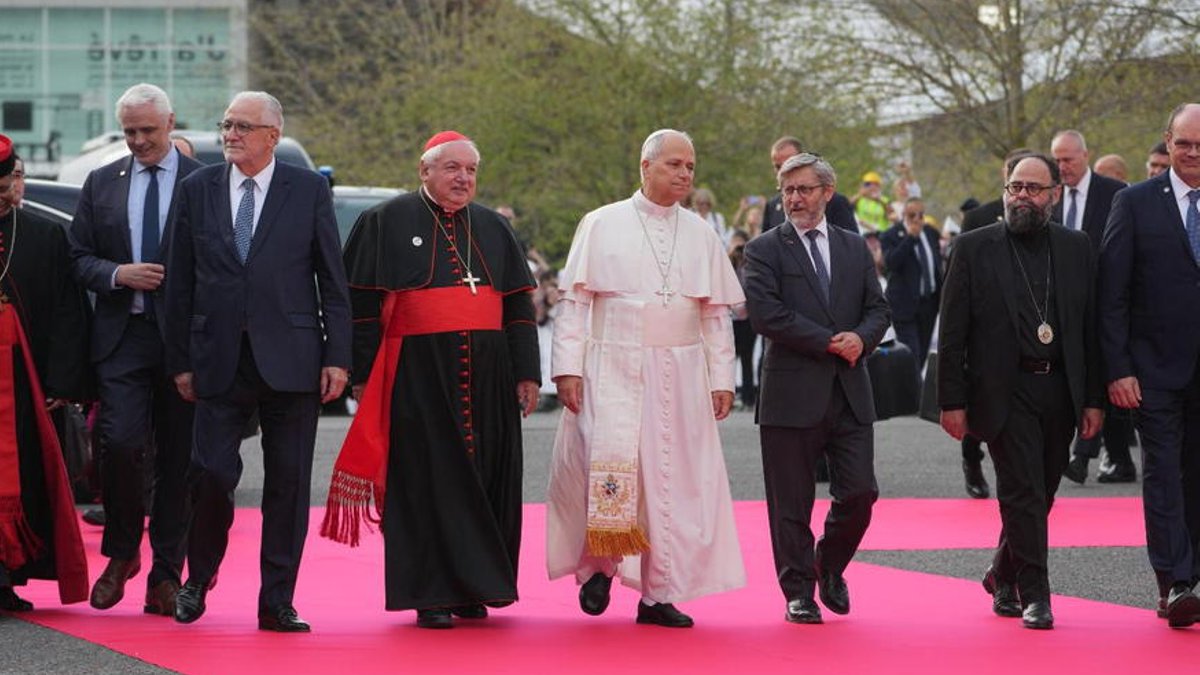
Pope Leo XIV urged religious leaders in France to preach messages of peace and unity as he concluded a visit to Metz, highlighting the historical dialogue that shaped Europe’s post-World War II integration. The pope presided over an interreligious meeting in the eastern city, which sits near the borders of Luxembourg and Germany, at a conference center named for Robert Schuman, a French Catholic statesman credited as a founding father of European unity.
Schuman’s Legacy and Call for Dialogue
Leo emphasized Schuman’s example of building dialogue among rivals, urging faith leaders to forge cross-border friendships in pursuit of peace. “Indeed, to invoke God’s name in order to justify violence or oppression is to profane that name,” Leo declared. “Religious discourse must constantly call for the disarmament of hearts and words.” Leo’s decision to end his four-day visit in Metz highlighted Europe’s tradition of dialogue as it confronts modern challenges like war, migration and polarization.
Schuman is best known for the 1950 Schuman Declaration, which proposed pooling coal and steel production between France and Germany to prevent future wars. This initiative became the European Coal and Steel Community, a precursor to the European Union. Schuman, a resistance fighter during World War II, was declared “venerable” by the Vatican in 2021, advancing his path toward sainthood.
Read Also: Dental Crowns in Fargo: Understanding Restorative Options for Long-Term Oral Health
Broad Visit and Public Response
Leo’s visit to France, historically a mix of Catholic and secular influences, centered on appealing to Europe’s Christian heritage to address contemporary ethical and geopolitical issues. On Sunday, he condemned France’s recent legislation permitting medically assisted dying, calling it “false compassion.” His message resonated widely, with approximately 800,000 people attending his Mass on Paris’ Place de la Concorde, far exceeding organizers’ expectations.
The pope’s Air France charter received a military escort of two French fighter jets for the flight from Lourdes to Metz on Monday morning. Later, he celebrated Mass at Metz’s cathedral of St. Stephen, a masterpiece of French Gothic architecture adorned with stained-glass windows by 20th-century Jewish artist Marc Chagall, which gave the cathedral the nickname “Lanterne du Bon Dieu,” or “The Good Lord’s Lantern.”
The gathering brought together Jewish, Muslim, Protestant and Orthodox leaders, reflecting Leo’s broader effort to unite faith communities in advocating for peace. His remarks in Metz directly linked spiritual responsibility to practical efforts in a region still shaped by historical conflicts between France and Germany.


Leave a Reply