
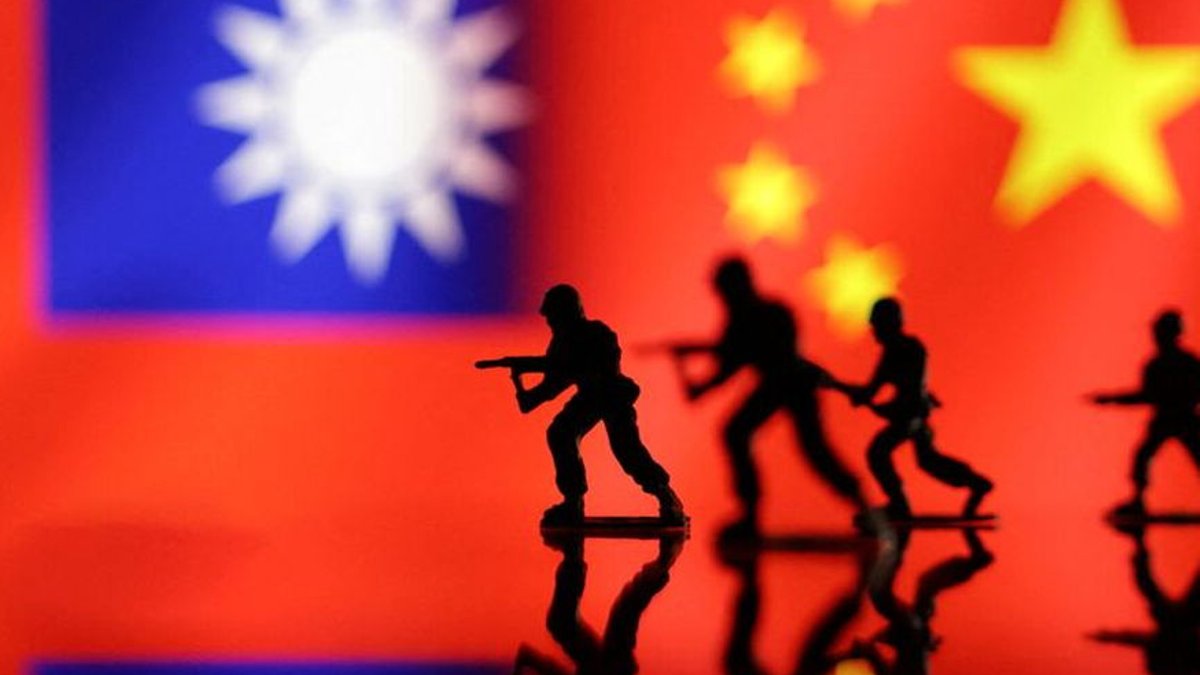
US intelligence assessments now consider a Chinese invasion of Taiwan before 2028 unlikely, despite Chinese President Xi Jinping’s instructions for his military to be ready by 2027 to take the island by force, if needed. The reassessment stems from delays in military readiness amid the Chinese Communist Party’s anti-corruption campaign and Beijing’s eagerness to observe the outcome of Taiwan’s 2028 election.
Intelligence sources indicate Xi’s 2027 deadline—initially set as a readiness benchmark rather than a fixed invasion date—has lost its urgency. The election of Taiwan’s president in 2028 will play a decisive role in Beijing’s strategy. If the ruling Democratic Progressive Party secures a fourth consecutive term, especially with current President Lai Ching-te’s reelection, China may treat 2028 as a critical juncture. “If that happens, I think 2028 becomes pretty sporty,” said one US official, speaking anonymously.
Lai’s administration has repeatedly rejected Beijing’s territorial claims, insisting Taiwan’s future must be determined by its people. China, however, insists Taiwan is an inseparable part of its territory and has never excluded the use of force to assert control. While Xi’s recent public statements emphasize “peaceful development” in cross-strait relations, his military’s preparedness remains a central concern for Washington. The US intelligence community’s March threat assessment already ruled out an invasion in 2024, favoring non-military pressure where possible.
That assessment now extends to 2027 as well. The anti-corruption campaign, launched during Xi’s tenure, has disrupted military planning by purging millions of officials, including senior military leaders. Since coming to power in 2012, Xi has unleashed a sweeping corruption and discipline crackdown. A string of investigations and expulsions has left just two active officials on the formerly seven-member Central Military Commission, including Xi himself, who serves as chair.
Read Also: E-scooter injuries double in two years
China’s military exercises in recent years have become less ambitious. Last year’s drills were smaller and less threatening compared to the past several years, and while this year’s expanded slightly, US officials describe them as inadequate. While they bounced back a bit this year, the official suggested Chinese military officials were dissatisfied with their readiness.
The official said China was believed to have drawn a lesson from the wars in Iran and Ukraine, recognizing that any invasion would require speed to avoid prolonged resistance. “There are way too many pieces that aren’t quite in place yet for what would be the most difficult military operation any military has attempted probably since the Allied invasion of Normandy,” the official said. The US remains Taiwan’s foremost ally, supplying weapons to deter Chinese aggression.
However, Beijing’s stance on the 2024 US presidential election is ambiguous. Former President Donald Trump, who met with Xi last week, has downplayed invasion risks during his administration but has not approved a recent $14 billion arms package for Taiwan, framing it as a “negotiating tool.” Without explicit US support, Taiwan’s ability to withstand a full-scale assault remains uncertain.
The campaign’s broader impact extends to logistics and procurement, where delays in promotions and personnel rotations have slowed modernization. The PLA’s reluctance to test its capabilities fully reflects concerns about vulnerabilities exposed in Ukraine and Iran, where prolonged conflicts led to unforeseen complications. China’s military exercises this year, though larger than in 2023, still avoided full-scale invasion simulations. Drills concentrated on blocking operations and maritime interdiction but omitted large-scale amphibious assaults, a notable absence, according to US officials.


Leave a Reply